
Jatake Station Ready to Operate by the End of January 2026, Supporting Productive-Age Mobility and Economic Dynamics in the Capital’s Buffer Zone
PT Kereta Api Indonesia (Persero) continues to finalize the operational readiness of Jatake Station, which is scheduled to begin serving passengers at the end of January 2026. Located in Pagedangan District, Tangerang Regency, the station is situated on the Tanah Abang–Rangkasbitung Commuter Line, a main corridor for daily mobility between the buffer areas and Jakarta’s economic activity centers.
Based on January 2026 BPS data for Tangerang Regency, the area is home to approximately 3.46 million people, with 67.82 percent of the population in the productive age group (15–59 years). This demographic composition creates a high level of daily mobility, particularly among workers and business operators who travel across regions to Jakarta. In 2025, Tangerang Regency’s Human Development Index (HDI) stood at 76.74 and its Open Unemployment Rate (TPT) was 5.94 percent, reflecting an active labor market dynamic and the need for efficient transportation access.
From an economic perspective, Tangerang Regency is one of the engines of activity in the metropolitan area. The region’s economic structure shows a strong activity base closely related to commuter mobility: Manufacturing contributed the largest share of the economy at 33.74 percent, followed by Construction at 16.36 percent and Wholesale and Retail Trade; Repair of Motor Vehicles and Motorcycles at 11.35 percent in 2024.
In line with this, Tangerang Regency’s gross regional domestic product (GRDP) per capita in 2024 was recorded at Rp54.73 million (highly preliminary figure), indicating the large scale of economic activity and the need for reliable connectivity to support daily productivity.
This condition is reflected in the long-term trend of increasing users of the Tanah Abang–Rangkasbitung Commuter Line. In 2018, the number of users was recorded at 54.17 million people, increasing to 55.63 million people in 2019. The COVID-19 pandemic reduced mobility to 26.83 million people in 2020. Since 2021, public mobility has consistently increased, with 42.11 million users in 2021, 43.32 million in 2022, increasing to 62.09 million in 2023, rising to 70.00 million in 2024, and reaching 77.55 million users throughout 2025.
This pattern confirms the Commuter Line as the main mode of daily economic mobility for communities in Jakarta’s buffer areas: workers in the industrial, service, and logistics sectors, as well as MSME operators and traders who need fast, affordable, and scheduled access.
Vice President Corporate Communication of KAI Anne Purba explained that the increasing need for mass transportation is closely correlated with the demographic characteristics and economic activity structure of Tangerang Regency.
“BPS data shows the dominance of the productive-age population along with an active labor market dynamic. Jatake Station is designed to facilitate access for the people of Pagedangan and surrounding areas to economic activity centers, with more efficient travel times and affordable transportation costs,” said Anne.
The Tanah Abang area, as a national textile and wholesale trading center, has strong economic ties with its surrounding areas. Traders, workers in the trade sector, and MSME operators from Tangerang Regency regularly travel to the area. The presence of Jatake Station shortens access from residential and activity clusters in Pagedangan and surrounding areas, thereby supporting the smooth operation of trade activities and daily economic productivity.
For formal workers, Jatake Station strengthens the option of living in more affordable residential areas in the buffer zone compared with central Jakarta, without sacrificing travel certainty. This is relevant to the characteristics of Tangerang Regency, which covers an area of 959.61 square kilometers and is divided into 29 districts, thus requiring transportation hubs capable of consolidating community movement from various residential areas toward mass transit service corridors.
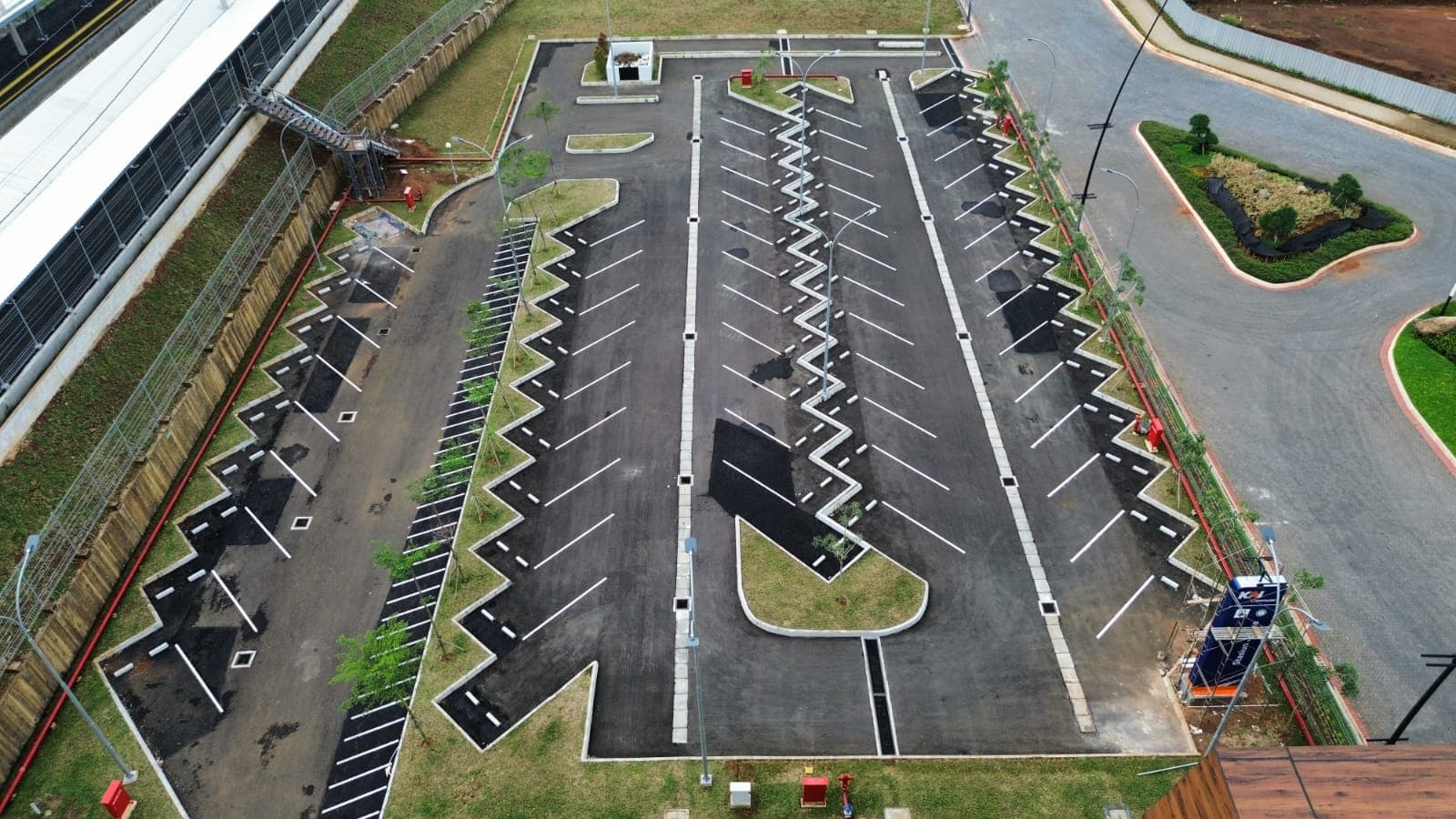
Jatake Station was built through a creative financing scheme between KAI and PT Bumi Serpong Damai Tbk (Sinar Mas Land) under the Transit Oriented Development (TOD) concept. The station stands on an area of 2,435 square meters, has a three-story building, and is designed to serve up to 20,000 passengers per day. Parking areas for motorcycles, cars, and bicycles have been prepared, along with approximately 4,000 square meters of additional development land to support intermodal integration.
In terms of design, Jatake Station adopts a modern tropical concept with natural air circulation in public areas and the use of solar panels to support energy efficiency. This approach is in line with the need for a station that is not only functional but also adaptive to customer comfort.
Currently, Jatake Station has entered the functional testing and operational simulation stage together with the Directorate General of Railways of the Ministry of Transportation. This stage is being carried out to ensure that all aspects of safety, security, and service readiness meet the required standards before the station begins operations.
“Jatake Station strengthens the Commuter Line service network and supports the economic mobility of the people of Tangerang Regency as a buffer area for Jakarta. We are optimistic that the presence of this station will improve mobility efficiency and community productivity sustainably,” concluded Anne.
Vice President Public Relations KAI

