
316 Level Crossings Closed, KAI Strengthens Safety Education and Enforcement
Every level crossing is a point where travel and safety meet. At these points, the roles of road users and train journeys complement each other to create safe and comfortable mobility. Throughout 2025, PT Kereta Api Indonesia (Persero) strengthened its safety commitment by closing high-risk level crossings, increasing public education, and strengthening enforcement of regulations to protect road users and train journeys.
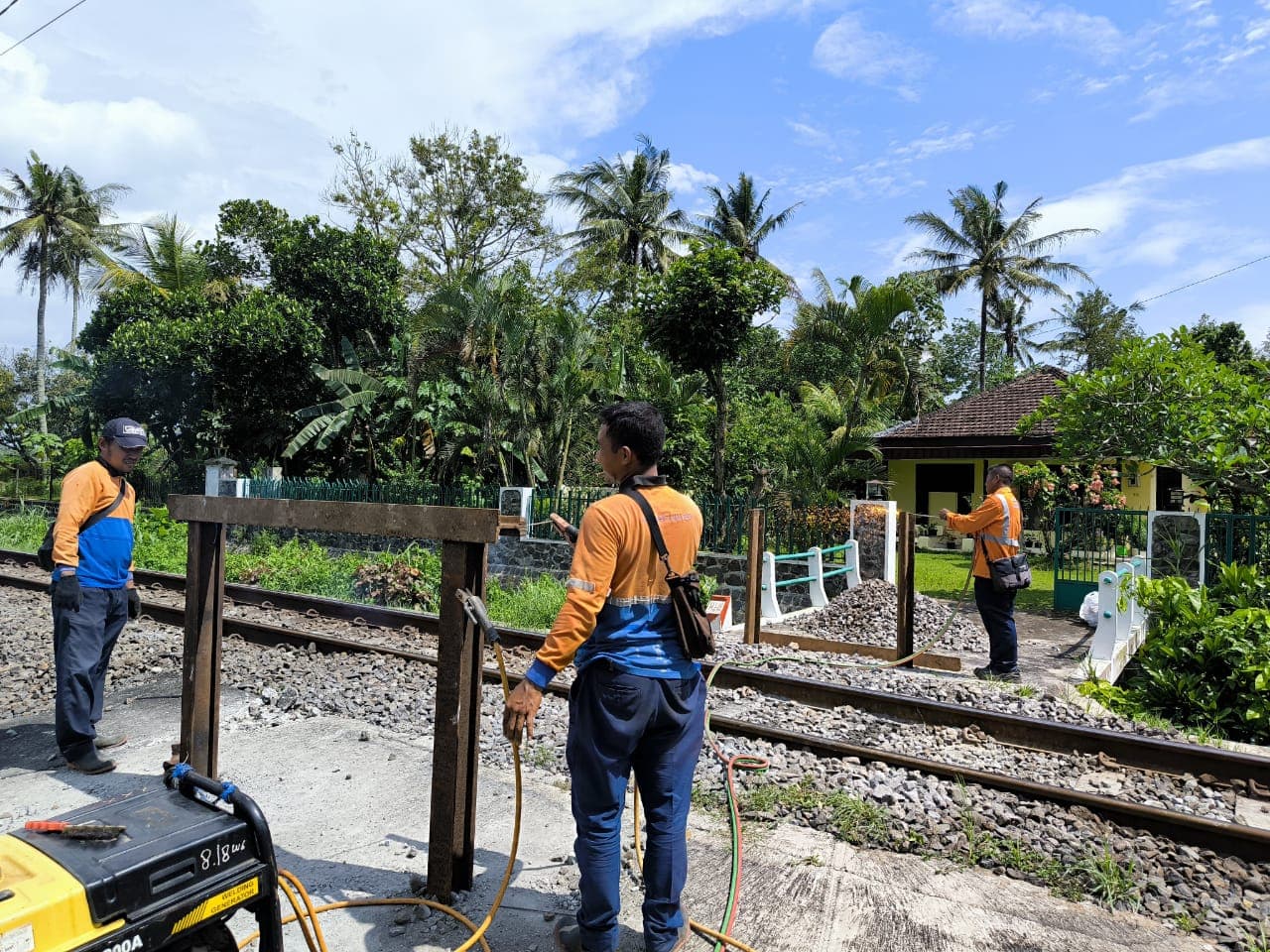
As part of these efforts, KAI has closed 316 level crossings considered prone to accidents through collaboration with the central and regional governments, the police, the Indonesian National Defense Forces (TNI), as well as relevant ministries and institutions. These closures were carried out to create a more orderly traffic environment while supporting the national agenda to improve transportation safety.
At the same time, KAI strengthened its educational approach to build a culture of traffic discipline. Throughout 2025, KAI conducted 2,016 safety awareness activities around railway lines, 212 educational activities at schools, installed 687 safety banners, and carried out 655 TJSL activities in station environments. All of these initiatives were aimed at fostering an understanding that crossing gates, signs, and road markings are part of a shared protection system.
Vice President Corporate Communication of KAI Anne Purba emphasized that safety will be further strengthened when supported by public compliance and participation.
“We encourage the public to stop for a moment at the crossing gate, obey the signs, and wait until it is truly safe before crossing. This simple action is a form of care for ourselves, our families, and fellow road users,” said Anne.
To support operational safety, KAI also carried out 52 enforcement actions against illegal structures in areas that could potentially disrupt train operations. This enforcement is part of securing the Railway Right-of-Way (RUMAJA), namely the area closest to the tracks that is used for railway operations and maintenance.
RUMAJA needs to be kept orderly and clean so that train journeys can run smoothly. KAI continues to coordinate with regional governments and local communities to ensure that this area is utilized according to its designated purpose, for the comfort and safety of all.
The provisions regarding RUMAJA are regulated under Law Number 23 of 2007 concerning Railways, and KAI is committed to implementing them through persuasive and educational approaches while prioritizing dialogue with the community.
“We carry out enforcement through a humane and collaborative approach. The main objective is to create a safe and orderly space for everyone, rather than simply enforcing regulations,” explained Anne.
Community involvement also strengthens KAI’s safety strategy. To date, KAI fosters 56 railfans communities with 6,455 registered members. Throughout 2025, KAI conducted 1,509 activities with the communities, particularly those related to travel safety campaigns and public education within the railway environment.
“We believe that a culture of safety grows from good habits practiced together. Not passing through crossing gates when they are closed, not walking on railway tracks, and keeping the areas around the tracks orderly are tangible contributions from the public to safety,” added Anne.
Through the closure of high-risk level crossings, strengthened safety education, enforcement against illegal structures, and securing RUMAJA, KAI reaffirms its commitment to providing train journeys that are increasingly safe, comfortable, and reliable.
KAI encourages the public to make orderly behavior at level crossings part of their everyday lifestyle. Stopping for a moment, obeying signs, and waiting patiently are small steps that have a major impact on shared safety.
“Safety is a form of care. By being orderly today, we protect a safer future for everyone,” concluded Anne.
VP Corporate Communication KAI
