
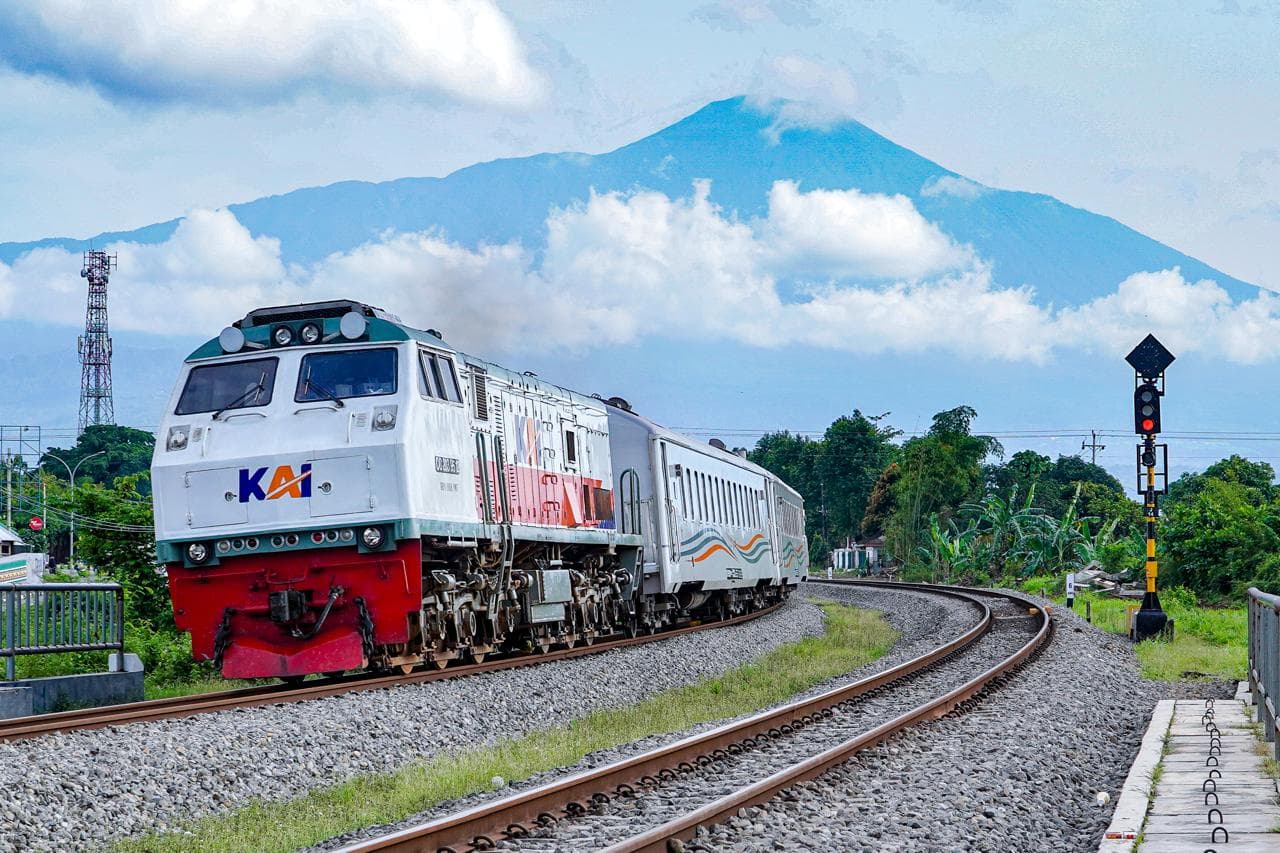
Customer Traffic Along the Banyuwangi–Malang–Purwokerto Route Grows During Nataru 2025/2026
PT Kereta Api Indonesia (Persero) recorded growth in customer traffic along the Banyuwangi–Malang–Purwokerto route during the 2025 Christmas and 2026 New Year transportation period (Nataru), from 18 December 2025 to 4 January 2026. The route serves interregional travel between East Java and Central Java, particularly during the year-end holiday period.
In the Banyuwangi area, Ketapang Station served 25,605 departing customers, an 11 percent increase, and 28,041 arriving customers, a 10 percent increase compared to the previous Nataru period. This achievement places Ketapang Station among the stations with the highest customer traffic volumes in eastern Java.
KAI Vice President of Corporate Communication Anne Purba said that the growth in customer traffic during Nataru reflects the increasing use of scheduled railway services for intercity travel during the holiday period.
During Nataru 2025/2026, the number of departing and arriving customers at Ketapang Station ranked third highest in the Jember Operational Area 9. Jember Station served 67,743 departing customers and 63,765 arriving customers, followed by Banyuwangi Station with 31,029 departing customers and 31,715 arriving customers. Ketapang’s position among these stations illustrates the distribution of customer mobility across the Tapal Kuda region of East Java.
Regionally, during the period from 18 December 2025 to 4 January 2026, Surabaya Operational Area 8 also served 450,668 customers, an increase of 12 percent; Jember Operational Area 9 served 207,980 customers, an increase of 11 percent; and Purwokerto Operational Area 5 served 322,780 customers, an increase of 17 percent compared to the previous Nataru period. These figures demonstrate broad-based growth in customer travel across the areas connected by the Banyuwangi, Malang, and Purwokerto corridors.
In Purwokerto Operational Area 5, the increase in customer numbers was also reflected in the long-distance train services with the highest volumes. During Nataru, the Kutojaya Selatan train served 15,053 customers, followed by the Serayu train with 12,479 customers, the Kamandaka train with 12,262 customers, while the Sawunggalih and Joglosemarkerto trains each served more than 10,000 customers. In addition, the Malioboro Ekspres train served 8,971 customers, further supporting customer mobility to Yogyakarta and southern Central Java.
In terms of services in East Java, the Banyuwangi–Malang route is served by several long-distance trains with high occupancy levels. On the Malang–Jember–Ketapang route, the Ijen Ekspres train served 1,629 Executive Class customers and 4,956 Economy Class customers, while the Tawang Alun train served 10,004 Economy Class customers with an occupancy rate of 105 percent. On the Banyuwangi–Surabaya route, the Probowangi train served 11,954 Economy Class customers with an occupancy rate of 104 percent, while the Mutiara Timur train from Surabaya Pasarturi and Surabaya Gubeng served a total of 13,130 customers across various departure schedules.
The growth in customer traffic was also influenced by tourism activities and family travel. From Ketapang Station, customers continued their journeys to Banyuwangi’s coastal and marine destinations, such as Watu Dodol Beach, Boom Beach, and Bangsring Underwater, as well as urban areas known for their diverse culinary offerings and regional tourism activities. Meanwhile, Malang and Purwokerto served as destinations for customers traveling for education, economic activities, and regional mobility.
Anne added that travel patterns during Nataru indicate that demand for services along the Banyuwangi–Malang–Purwokerto route has the potential to continue growing in the post-Nataru period, as interregional activities remain active.
To support customer journeys, KAI continues to optimize its digital services through Access by KAI, which facilitates journey planning, ticket purchases, real-time schedule monitoring, and access to service information.
VP Corporate Communication KAI

