
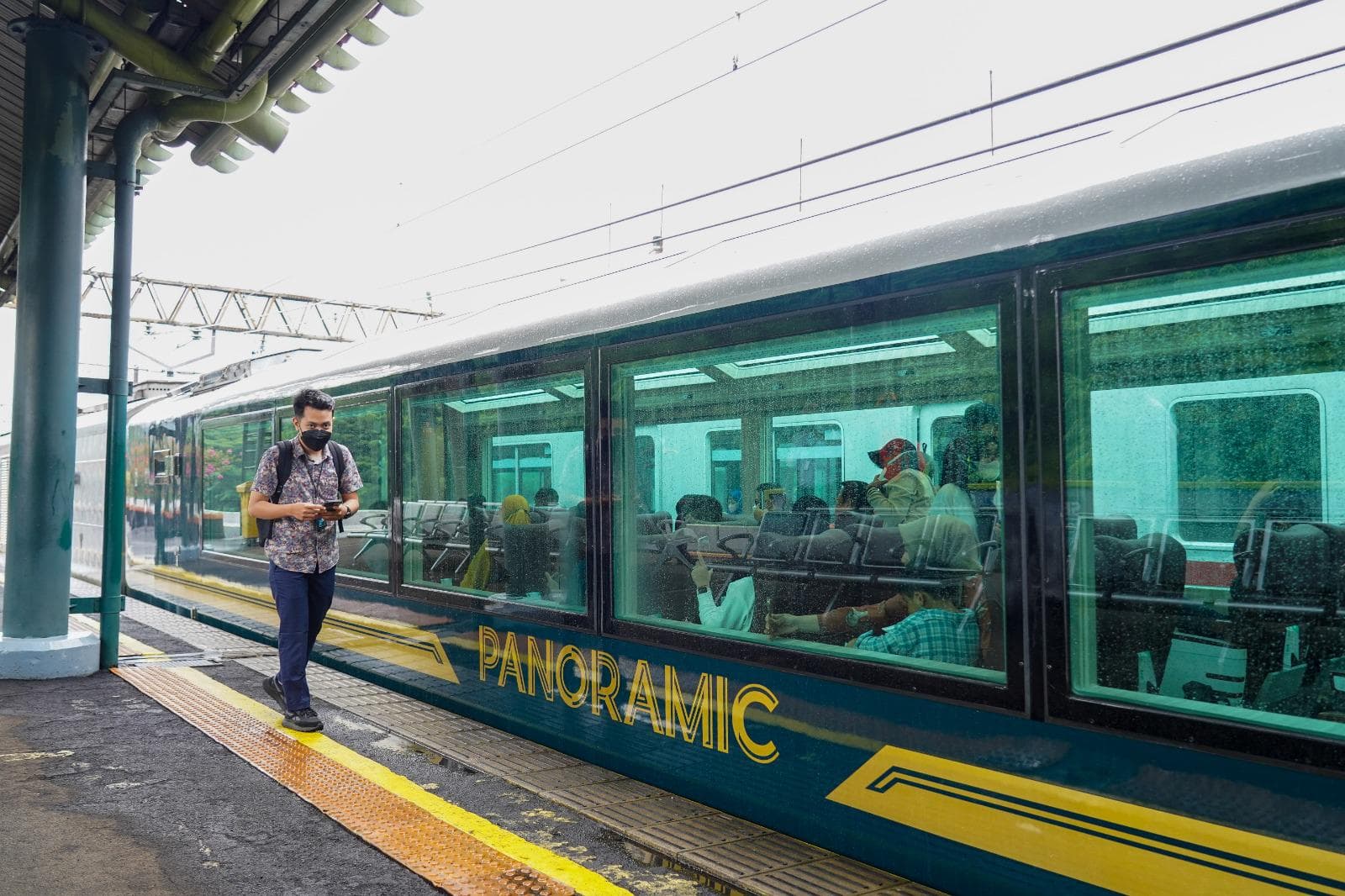
Panoramic Train Becomes a Favorite for Nataru Travel, Supporting Government Efforts to Boost Tourism and Regional Economies
Public interest in enjoying train journeys as part of the tourism experience continues to show a positive trend. During the 2025 Christmas and 2026 New Year transportation period (Nataru), the Panoramic Train service operated by PT Kereta Api Indonesia (Persero) recorded strong demand, serving 11,819 customers with an occupancy rate of 120 percent of the total 9,576 seats provided.
This achievement is in line with the government's policy direction to promote experience-based tourism, strengthen regional destinations, and improve interregional connectivity, as outlined in national tourism development programs and efforts to strengthen the creative economy.
KAI Vice President of Corporate Communication Anne Purba said that the Panoramic Train represents the transformation of railway services from simply being a means of transportation into an integral part of the tourism ecosystem.
“The Panoramic Train responds to current travel trends, where people not only want to reach their destinations but also enjoy the journey itself. This is in line with the government's efforts to promote quality tourism and stimulate regional economic activity through comfortable and sustainable connectivity,” said Anne.
The Panoramic Train service is currently available on the Argo Wilis train serving the Bandung–Surabaya Gubeng route (round trip), the Turangga train serving the Bandung–Surabaya Gubeng route (round trip), the Pangandaran train serving the Gambir–Banjar route (round trip), the Papandayan train serving the Gambir–Garut route (round trip), and the Parahyangan train serving the Gambir–Bandung route (round trip). These routes connect major cities with tourism destinations while also supporting government programs aimed at promoting more balanced development and strengthening destinations beyond metropolitan areas.
According to Anne, the high level of customer interest is closely linked to the appeal of the southern railway corridor of Java, which is served by most of these routes. The corridor is known for its diverse natural landscapes and serves as an important route for the development of nature- and culture-based tourism.
“Throughout the journey, customers can enjoy rolling hills, expansive rice fields, rivers, iconic bridges, historic tunnels, and open landscapes through the Panoramic Train’s wide windows. This visual experience makes the journey itself part of the destination,” explained Anne.
The presence of the Panoramic Train also generates direct economic benefits for the regions along its routes. Increased travel interest encourages tourist visits to cities and regencies along the routes, supporting the hospitality, culinary, MSME, and local creative industries. This is in line with government programs to strengthen local economies, MSMEs, and tourism villages.
“We see the Panoramic Train as a new driver for regional tourism. When access becomes more comfortable and attractive, interest in visiting increases, and local economies also benefit. This is a tangible example of synergy between public transportation and the national development agenda,” added Anne.
From a sustainability perspective, the use of railways for tourism also supports government programs to reduce emissions and develop low-carbon transportation, alongside growing public awareness of more environmentally friendly travel.
“KAI continues to evaluate and develop its services based on customer needs. Optimizing the Panoramic Train on strategic routes is part of our commitment to providing services that remain relevant to tourism trends, supporting interregional mobility, and aligning with the government’s agenda to develop sustainable tourism and economic growth,” concluded Anne.
VP Corporate Communication KAI