
KAI and the Directorate General of Railways Introduce Gapeka 2025 to Boost Economic Growth and Interregional Connectivity
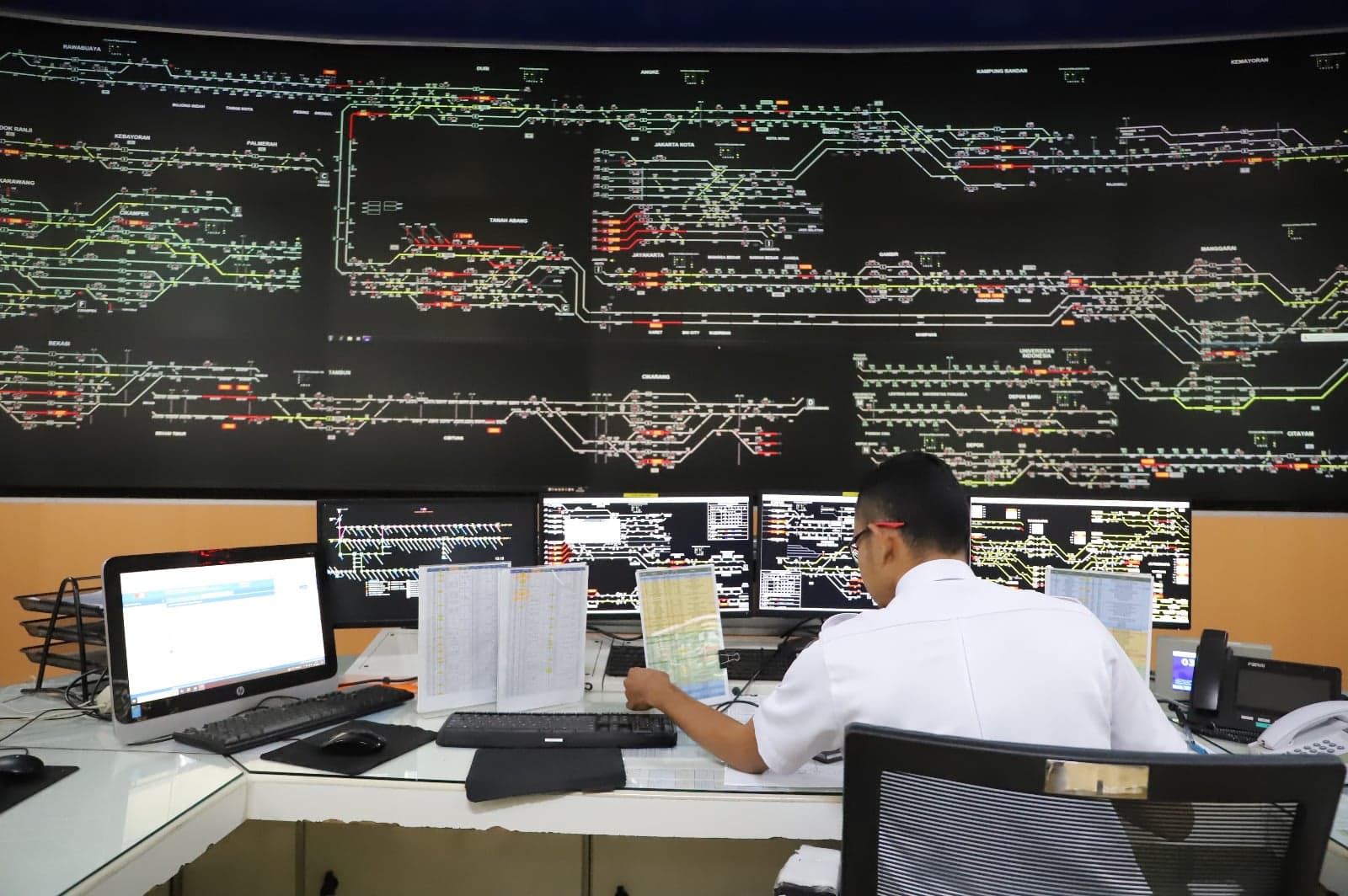
The Directorate General of Railways (DJKA) and KAI continue to strengthen their commitment to improving railway transportation services in Indonesia through the implementation of the 2025 Train Travel Chart (Gapeka 2025). With various enhancements, Gapeka 2025 aims to support economic growth, improve interregional connectivity, and provide faster and more efficient transportation services for the public.
"Under Gapeka 2025, KAI has increased operational speeds on 25 railway corridors in Java and 19 corridors in Sumatra. Through infrastructure upgrades allowing speeds of up to 120 km/h, as well as the use of newer and more reliable rolling stock, train operations have become more optimal. The impact of these improvements is a reduction in overall travel time, enabling customers to arrive at their destinations more quickly," said KAI President Director Didiek Hartantyo.
In line with the growing demand for railway transportation services, KAI has increased the number of train services by 8% to 17% compared with the existing operations.
Passenger capacity has also increased by 14% to 21%. Several train services receiving additional frequencies include:
1. Argo Merbabu: From 2 services to 6 services
2. Taksaka: From 4 services to 6 services
3. Purwojaya: From 2 services to 6 services
4. Sawunggalih: From 4 services to 6 services
5. Tawang Jaya Premium: From 2 services to 3 services
6. Menoreh: From 2 services to 3 services
7. Harina: From 2 services to 4 services
8. Pangrango: From 6 services to 8 services
As part of its service innovation, KAI has optimized and adjusted the routes of several train services to provide better customer service. The changes include:
1. Argo Cheribon: Converted into Gunungjati and Cakrabuana services.
2. Kutojaya Utara: Converted into Madiun Jaya.
3. Argo Parahyangan: Renamed Parahyangan with additional station stops.
4. Argo Bromo Anggrek: No longer stops at Bojonegoro and Pekalongan stations, resulting in a shorter travel time.
5. Argo Wilis: No longer stops at Ciamis Station, resulting in a faster journey.
Gapeka 2025 also introduces several new passenger train services, including:
1. Madiun Jaya, serving the Madiun – Pasarsenen (round trip) route, with Executive and Economy classes.
2. Sancaka Utara, serving the Surabaya Pasarturi – Solo Balapan – Cilacap (round trip) route, with Executive and Business classes.
3. Cakrabuana, serving the Gambir – Cirebon – Purwokerto (round trip) route, with Executive and Economy classes.
4. Ijen Ekspres, serving the Ketapang – Malang (round trip) route, with Executive and Economy classes.
5. Gunung Jati, serving the Gambir – Cirebon – Semarang Tawang Bank Jateng (round trip) route, with Executive and Economy classes.
In addition to passenger services, KAI has also increased freight transportation capacity by adding:
1. Six regular PT Bukit Asam coal train services, bringing the total to 24 Baratahan and 16 Barapati services.
2. Three regular private coal train services (one Simpang Muara and two Bara Serdang services).
Didiek stated that the service improvements introduced through Gapeka 2025 reflect the commitment of both the government and the company to providing reliable and efficient transportation while contributing to national economic growth.
"Through higher operating speeds, additional railway lines, station reactivations, and optimized operating patterns, we hope rail transportation will become the public's preferred mode of travel. These improvements are also expected to stimulate regional economies and strengthen national connectivity," Didiek concluded.
Speaking on the same occasion, Director General of Railways at the Ministry of Transportation, Risal Wasal, said that the implementation of Gapeka 2025 is expected to improve accessibility and drive economic activity. The Directorate General of Railways (DJKA) plays an active role in railway infrastructure development through the addition of new railway lines and the reactivation of stations. Several strategic initiatives under Gapeka 2025 include the opening of the new Pondok Rajeg Station, which will serve passengers in urban areas with high mobility.
In addition, DJKA has carried out railway reactivation and optimized operational patterns to increase transport capacity and improve travel efficiency. Mechanical signaling systems have also been upgraded to electrical signaling on the Haurpugur–Cicalengka, Prabumulih–Simpang, and Kramasan Station sections to improve operational safety.
"Under Gapeka 2025, several single-track railways have been upgraded to double-track lines to improve connectivity, including Bogor–Cicurug, Kiaracondong–Gedebage, Haurpugur–Cicalengka, Solo Balapan–Kalioso, Mojokerto–Sepanjang, and Muaraenim–Muaralawai. In addition, DJKA has introduced new railway sections, namely Rantauprapat Baru–Pondok S5, Semarang Tawang–Tanjungmas, Kreunggeukueh–Muara Satu, and Bingei–Beitang. With these additional lines, railway services are expected to reach more areas while further supporting public mobility and economic development," said Risal Wasal.
With the implementation of Gapeka 2025, DJKA and KAI reaffirm their commitment to creating a faster, safer, and more comfortable railway transportation system. These various improvements not only enhance travel efficiency but also contribute to economic growth across different regions. (Public Relations KAI)
