
61.22% of KAI Passenger Movements Occurred Outside the 10 Busiest Stations
PT Kereta Api Indonesia (Persero) recorded 29,858,267 customers using KAI-managed long-distance trains and local trains during the first semester of 2026. These services were provided through 232 stations across Java and Sumatra.
In station-based records, a customer journey generates one boarding activity at the departure station and one alighting activity at the destination station. Based on this method, a total of 59,716,534 customer boarding and alighting activities were recorded during January–June 2026.
A total of 36,560,181 activities, or 61.22 percent of the total, took place at 222 stations outside the group of the 10 highest-volume stations. This means that more than three out of every five customer boarding and alighting activities occurred outside the busiest stations.
KAI Vice President of Corporate Communication Anne Purba said that the composition reflects travel needs that are distributed across various regions with diverse destinations.
“Behind these 36.56 million boarding and alighting activities are journeys to schools, universities, hospitals, workplaces, markets, public service centers, tourist destinations, and family members in other regions. This distribution demonstrates the role of transportation in expanding opportunities for the public,” said Anne.
Meanwhile, the 10 highest-volume stations recorded 23,156,353 boarding and alighting activities, or 38.78 percent of the total in the first semester of 2026. Pasar Senen Station ranked first with 3,849,606 activities, followed by Gambir with 3,227,508 activities and Yogyakarta with 3,217,240 activities.
Semarang Tawang Station recorded 2,152,894 activities, Surabaya Gubeng 1,904,845 activities, Purwokerto 1,839,475 activities, Surabaya Pasarturi 1,823,529 activities, Semarang Poncol 1,740,518 activities, Solo Balapan 1,706,290 activities, and Bandung 1,694,448 activities.
The larger share of activities outside these 10 stations indicates that rail-based mobility also relies on medium-sized cities, regency capitals, education hubs, regional trade centers, and areas connected to surrounding cities.
The same pattern is visible when the calculation is expanded beyond the group of the 50 highest-volume stations. A total of 182 stations outside this group collectively recorded 13,066,904 customer boarding and alighting activities, or 21.88 percent of all movements during the first semester of 2026.
“Each station serves a different volume of customers. However, the significance of a station is also reflected in the community needs it reaches. Services from the nearest station can open more planned travel options for education, healthcare facilities, employment, trade, and various family needs,” Anne stated.
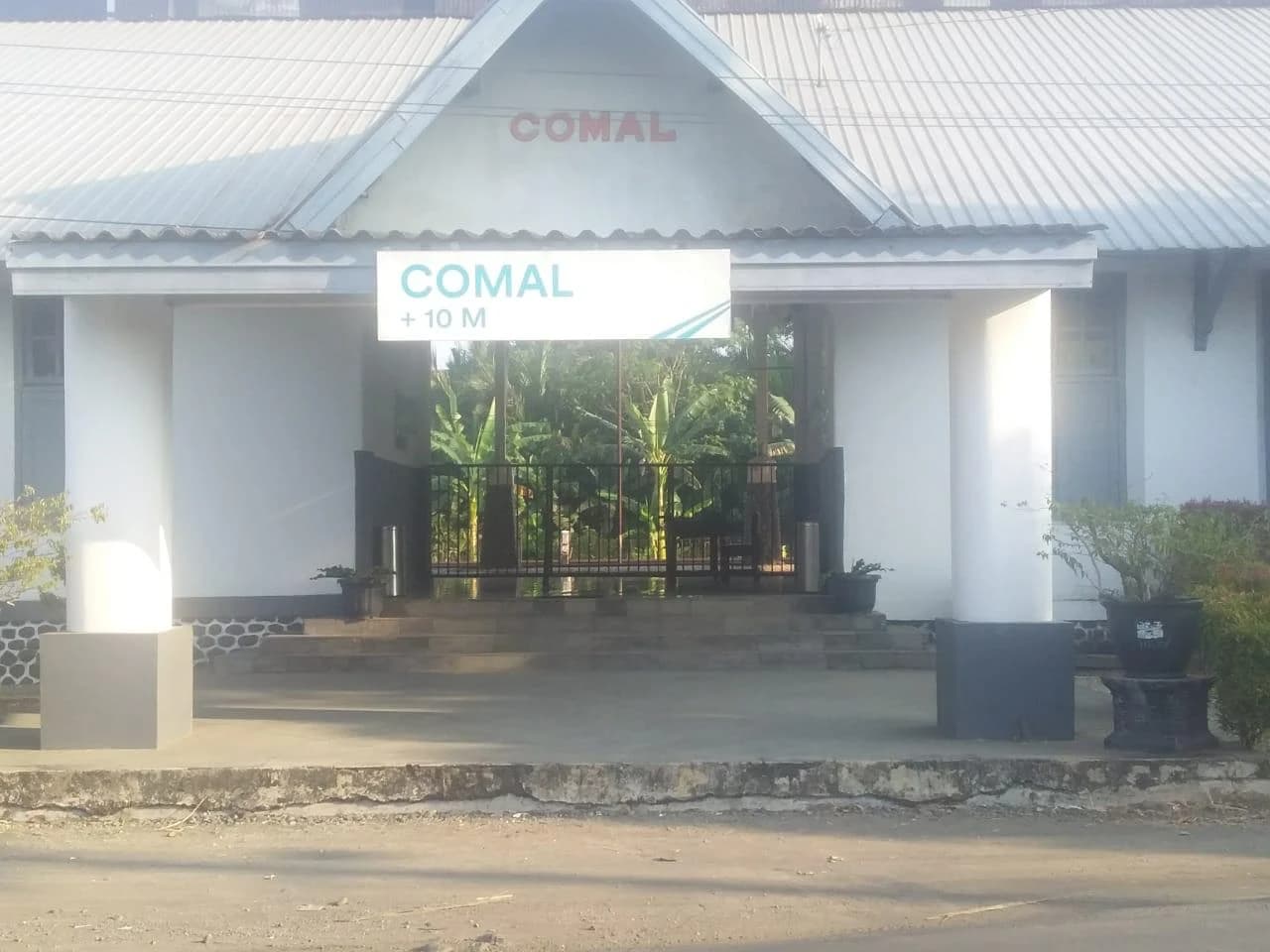
The service distribution became even broader with the commencement of customer boarding and alighting activities at Comal, Plabuan, and Rajapolah Stations in April 2026. Developments during the following three months showed emerging community travel demand through these three stations.
Comal Station began operations with 512 customer boarding and alighting activities in April. The figure increased to 5,623 activities in May and 5,861 activities in June. Cumulatively, Comal Station recorded 11,996 activities during April–June 2026, with June volume increasing by 4.23 percent compared with May.
During the same period, Plabuan Station recorded 23 activities in April, then increased to 375 activities in May and 416 activities in June. Total service during the three months reached 814 activities, while June volume increased by 10.93 percent compared with May.
Growth was also recorded at Rajapolah Station. Customer boarding and alighting activities increased from 88 in April to 154 in May, then reached 286 in June. June volume increased by 85.71 percent compared with May, with a total of 528 activities during April–June 2026.
Collectively, Comal, Plabuan, and Rajapolah served 623 customer boarding and alighting activities in April. The figure increased to 6,152 activities in May and 6,563 activities in June. During their first three months of operation, the three stations recorded a total of 13,338 customer activities.
“The development of Comal, Plabuan, and Rajapolah shows that travel demand begins to emerge when boarding and alighting services become available. Every figure represents people gaining new options to reach activities and services in other regions,” Anne said.
The availability of travel services from more stations can expand options for students to reach schools, universities, and education centers. Reliable schedules also help patients and accompanying family members plan journeys to hospitals or inter-regional healthcare facilities.
This connectivity also supports workers and business actors in reaching employment centers, markets, trade areas, and business partners. Customer activities at stations subsequently create demand for connecting transportation, food and beverages, accommodation, retail trade, and community services around stations and destination areas.
The distribution of customer movements has a broader meaning than the volume concentrated in a single location. Each station can become a gateway for communities to access basic services, increase productivity, expand business reach, and find economic opportunities in other regions.
This direction is aligned with the global agenda for sustainable transportation, which places access, connectivity, safety, and inclusivity as part of improving people’s quality of life. Transportation serves as a bridge between places of residence and various social and economic opportunities.
At the national level, equitable transportation access is relevant to Indonesia’s National Medium-Term Development Plan (RPJMN) 2025–2029. The RPJMN is Indonesia’s five-year development planning document that outlines priorities for improving human resource quality, strengthening the economy, reducing poverty, and promoting more balanced regional development.
Boarding and alighting data at each station provide an overview of inter-regional mobility patterns. Changes in volume over time also indicate shifts in travel needs, both at stations with high service levels and at stations that have recently begun serving customers.
“Ultimately, transportation equity opens the door to equal opportunities. When travel becomes easier to plan, people gain broader opportunities to study, maintain their health, work, trade, and improve their quality of life,” Anne concluded.
VP Corporate Communication KAI