
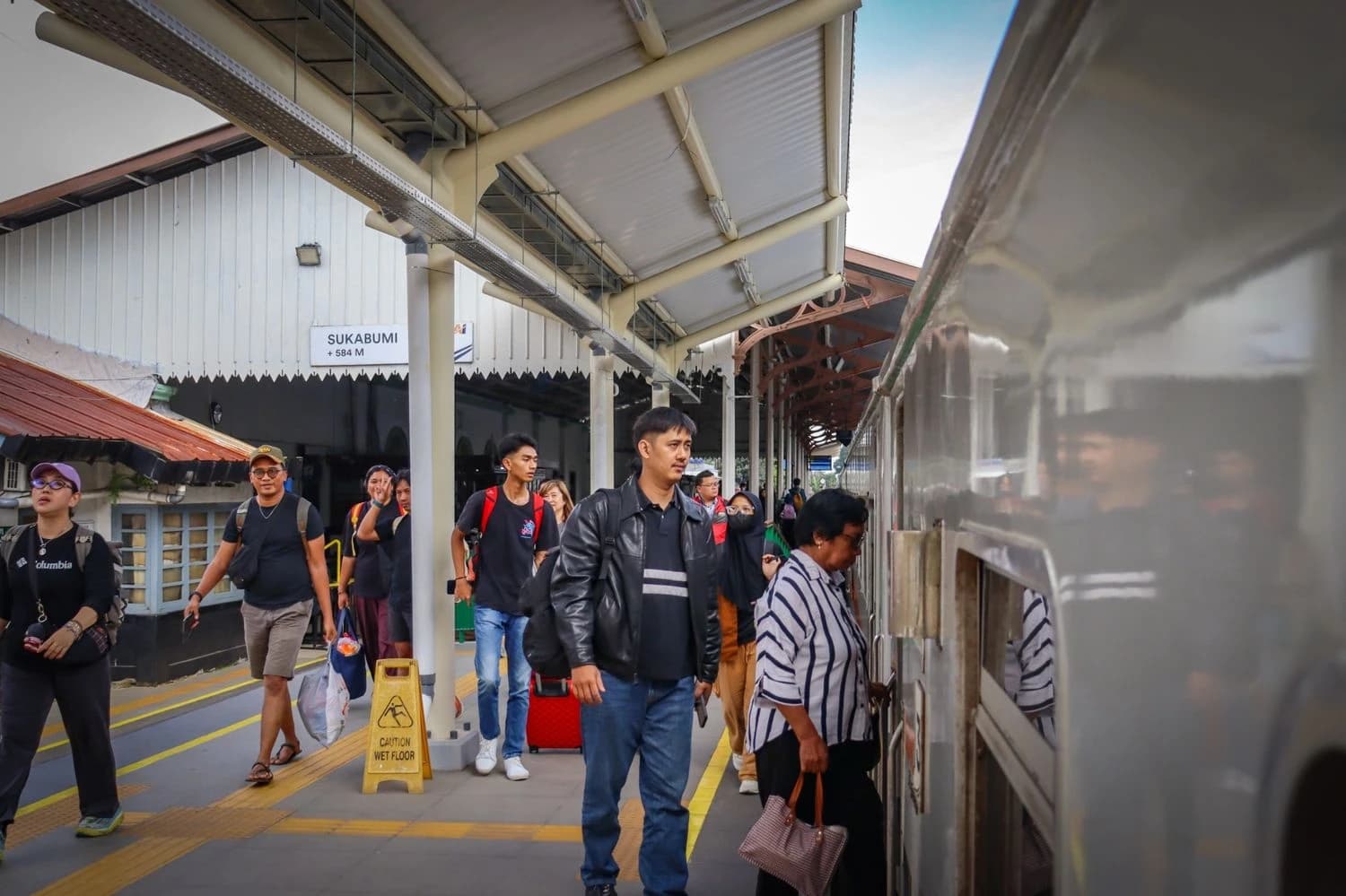
4.67 Million Customers Utilize KAI-Managed Local Train Services, Strengthening Mobility and Regional Economies
PT Kereta Api Indonesia (Persero) recorded a total of 4,669,419 customers using KAI-managed Local Train (KA Lokal) services throughout the first semester of 2026. This figure represents an increase of 13.59 percent compared to the same period in 2025, which reached 4,110,588 customers.
KAI Vice President of Corporate Communication, Anne Purba, stated that the increase highlights the important role of Local Trains in supporting community mobility related to work, education, trade, public services, family visits, tourism, and travel to airports.
“Local Trains are closely connected to community activities across various regions. Through scheduled services and large capacity, they provide the public with transportation options to access city centers as well as activity hubs along the service corridors,” said Anne.
Of the total volume, PSO Local Train services served 3,582,434 customers, an increase of 13.89 percent compared to 3,145,547 customers in the first semester of 2025. Meanwhile, Commercial Local Train services served 1,086,985 customers, up 12.64 percent from 965,041 customers in the same period of the previous year.
One of the services contributing to regional mobility is the Pangrango Train, operating on the Bogor–Sukabumi round-trip (pp) route. During the first semester of 2026, the Pangrango Train served 591,479 customers, an increase of 6.69 percent compared to 554,394 customers in the same period of 2025.
The Pangrango Train connects the Bogor and Sukabumi areas, which are centers of educational, commercial, public service, and tourism activities. The service provides travel options for workers, students, university students, business actors, tourists, and intercity travelers.
In West Java, the Siliwangi Train served 814,727 customers in the first semester of 2026, an increase of 5.62 percent compared to 771,387 customers in the first semester of 2025. This service supports community mobility in Sukabumi, Cianjur, and surrounding areas.
“The Pangrango and Siliwangi Trains complement each other in expanding public access in West Java. Their services support inter-regional travel while connecting communities to schools, universities, markets, service centers, and tourism destinations,” Anne added.
The contribution of Local Train services is also evident in West Sumatra. The Minangkabau Express Train served 120,599 customers during the first semester of 2026. This service supports travel integration between Padang city center and Minangkabau International Airport, providing time certainty for the public, tourists, and business travelers.
Meanwhile, the Lembah Anai Train served 162,428 customers, more than triple the 51,035 customers recorded in the first semester of 2025. This increase reflects growing public demand for mass transportation connecting residential areas with education, trade, and tourism centers in West Sumatra.
According to Anne, the benefits of Local Train services also extend to economic activities around stations. Passenger movement creates opportunities for culinary businesses, trade, feeder transportation, accommodation, as well as micro and small enterprises in local areas.
“When inter-regional access becomes easier, the scope of community activity also expands. Local Trains help connect people with various economic opportunities and public services in the regions they serve,” said Anne.
Rail transport also offers large capacity in a single journey, allowing many passengers to be served simultaneously. This characteristic helps reduce reliance on private vehicles while supporting more organized and efficient travel.
KAI continues to evaluate passenger travel patterns, capacity needs, departure schedules, station services, and integration with feeder transportation. Service development will be aligned with community needs and mobility characteristics in each region.
“KAI will continue to strengthen the reliability of Local Train services to expand their benefits. Safety, punctuality, comfort, and ease of access remain key priorities in maintaining the quality of public travel,” Anne concluded.
VP Corporate Communication KAI