
KAI Group Serves 307.86 Million Passengers; Trains Become Increasingly Relevant Amidst Rising Mobility
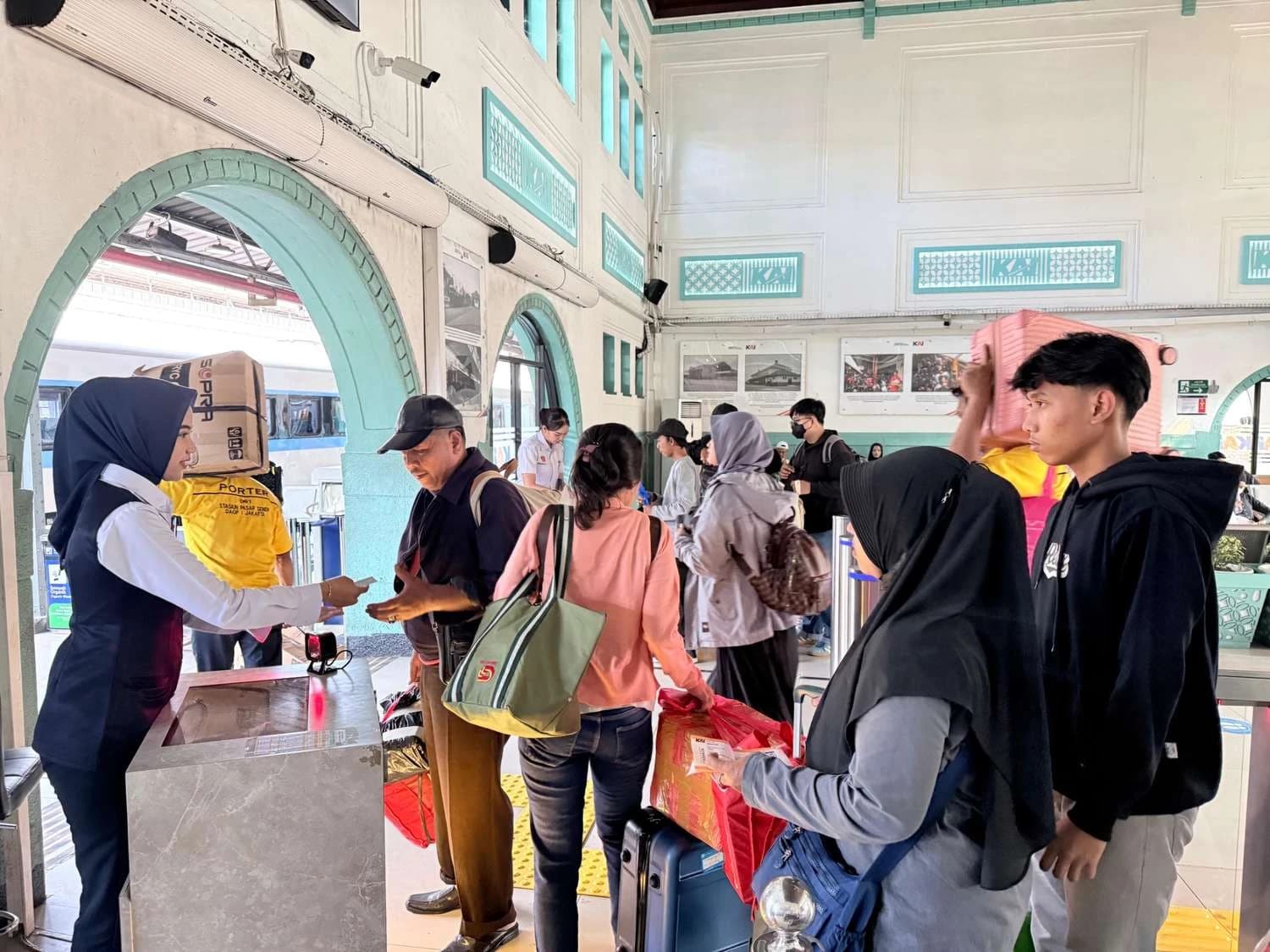
Throughout January–July 2026, KAI Group served 307,860,743 customers, an increase of 8.32% compared to 284,202,884 customers during the same period last year. This figure illustrates the growing scale of public mobility and the need for transportation modes capable of accommodating a large number of journeys with high capacity.
In this context, railways offer advantages in terms of capacity. Based on the KAI 2025 Sustainability Report, one train set can, illustratively, replace approximately 160 cars or 560 motorcycles. Passenger train travel also produces around 41 grams of CO₂ per passenger per kilometer.
Vice President of Corporate Communication KAI Anne Purba said that discussions about low-emission transportation are becoming increasingly relevant to people’s daily lives because every journey is always related to choices of transportation modes, capacity, time, and energy consumption.
“What people ultimately need is simple: travel that is easy and comfortable. When one train set can carry many people at the same time, the benefits are also reflected in more efficient use of space and energy,” Anne said.
The large volume of travel also makes energy management within operational environments an important consideration. By the end of 2025, KAI had developed solar power plants at 92 locations with a total capacity of 4,430.65 kWp, or approximately 4.43 MWp. This development is part of a decarbonization strategy targeting an emissions reduction of approximately 166,873 tons of CO₂e by 2030.
Similar efficiency measures have also been implemented in water consumption. In 2025, KAI’s water consumption was recorded at 716.30 megaliters, a reduction of 203.93 megaliters, or 22.16%, compared to 920.23 megaliters in 2024. This resource management is carried out alongside the use of biodiesel, waste management, and the provision of facilities that support the reduction of single-use plastics.
According to Anne, the increasing number of journeys serves as a reminder that the future challenge of mobility is not solely about increasing travel capacity, but also about how that capacity can be utilized more carefully.
“The higher the demand for travel, the more important it becomes to provide transportation modes capable of carrying large numbers of people efficiently. This is where public transportation has an increasingly significant role in supporting public mobility,” Anne said.
KAI sees that public travel patterns will continue to evolve alongside the growth of cities, economic activities, education, employment, and tourism. Therefore, strengthening high-capacity public transportation is an important part of ensuring that the growth of mobility can continue to be accommodated with more controlled use of space and energy.
“Railways will continue to play a role in providing travel that remains relevant to the needs of society today, while also being better prepared to meet future mobility needs,” Anne concluded.
VP Corporate Communication KAI