
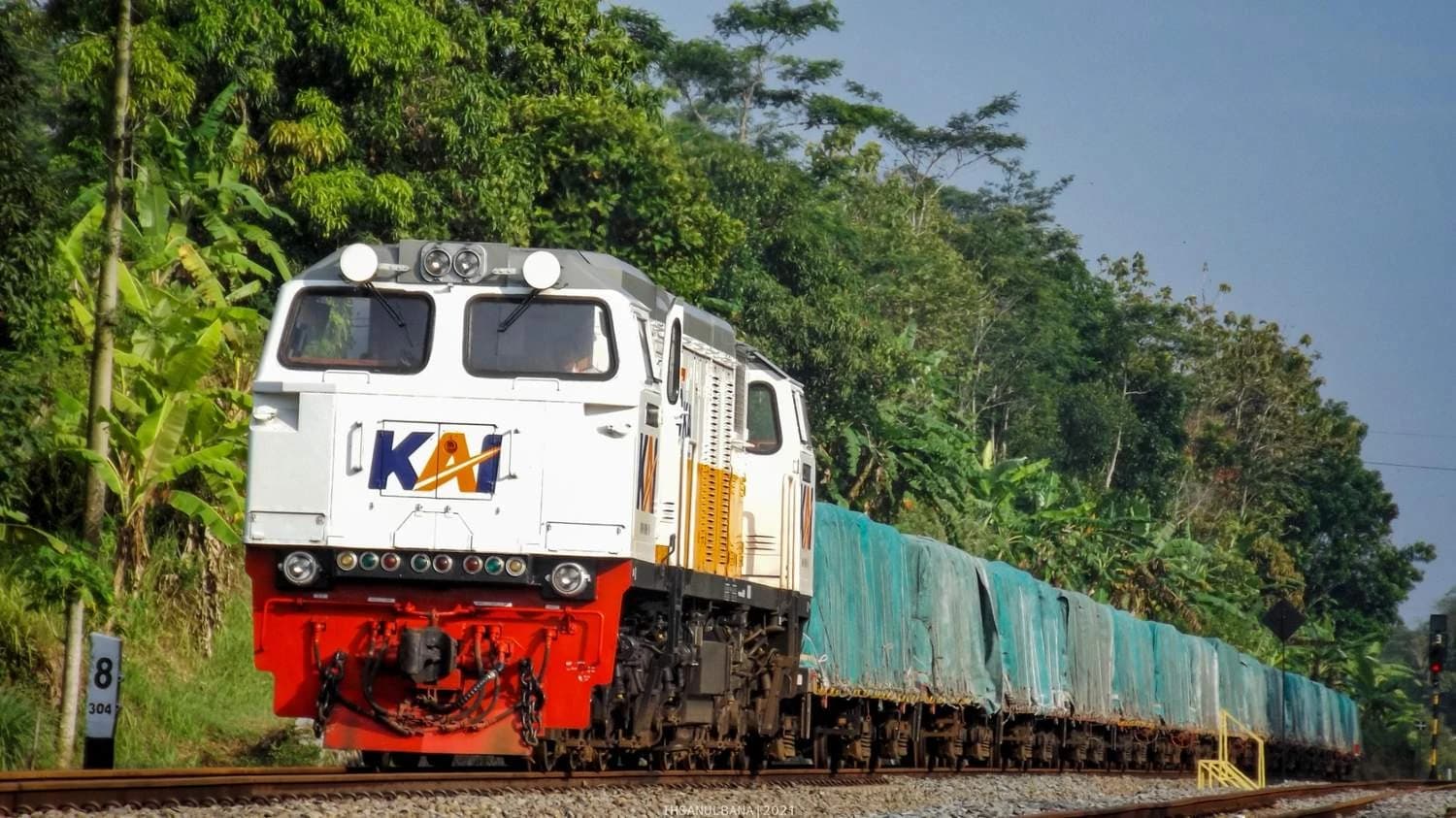
1.83 Million Tons of Cement and Clinker Transported by Rail Through September 2026
PT Kereta Api Indonesia (Persero) recorded 1,829,352 tons of cement and clinker transported by rail from January to September 2026. This volume represents one of the main components of KAI’s non-coal freight transportation, which reached 9,148,571 tons during the same period.
Compared with the figure at the end of July 2026, which stood at 1,357,524 tons, cement and clinker transportation increased by approximately 471,828 tons during August and September. This data shows that industrial material distribution continued through the end of the third quarter of 2026.
KAI Vice President of Corporate Communication Anne Purba said cement and clinker are well suited to rail freight services because they require large-volume shipments that are repeated along specific corridors.
“Cement and clinker distribution has distinct characteristics because of the large volumes involved and its connection to the continuity of production and construction activities. Trains provide a scheduled transportation option for moving materials from production areas to processing facilities and distribution points,” said Anne.
On average, the 1.83 million tons transported over nine months is equivalent to approximately 6,700 tons per calendar day. This scale of transportation illustrates the substantial demand for moving materials used in housing, public facilities, industrial areas, and various construction projects across regions.
KAI’s cement and clinker freight services operate along several corridors in Java and Sumatra. In South Sumatra, trains are used in the distribution chain for Semen Baturaja. Meanwhile, in West Sumatra, the railway network connects the Indarung industrial area with Bukit Putus, which is linked to the Teluk Bayur Port area.
Anne said each corridor has a different distribution pattern, depending on the locations of factories, processing facilities, terminals, and customer demand.
“What matters to industrial customers is the ability to move goods in large volumes according to schedules that can be planned in advance. Operationally, KAI adjusts its services to line capacity, rolling stock readiness, terminal facilities, and each customer’s specific needs,” said Anne.
Cement and clinker are also part of KAI’s increasingly diverse non-coal freight portfolio. Through September 2026, non-coal freight volume reached 9.15 million tons, growing by 2.6% compared with the same period last year.
According to Anne, rail freight has significant potential to serve high-volume commodities because a single train formation can carry substantial loads in one trip.
“Every ton of material transported by rail represents a production and distribution chain that continues to operate. KAI will maintain service reliability so that industrial customers have transportation options suited to their business needs,” Anne concluded.'
VP Corporate Communication KAI