
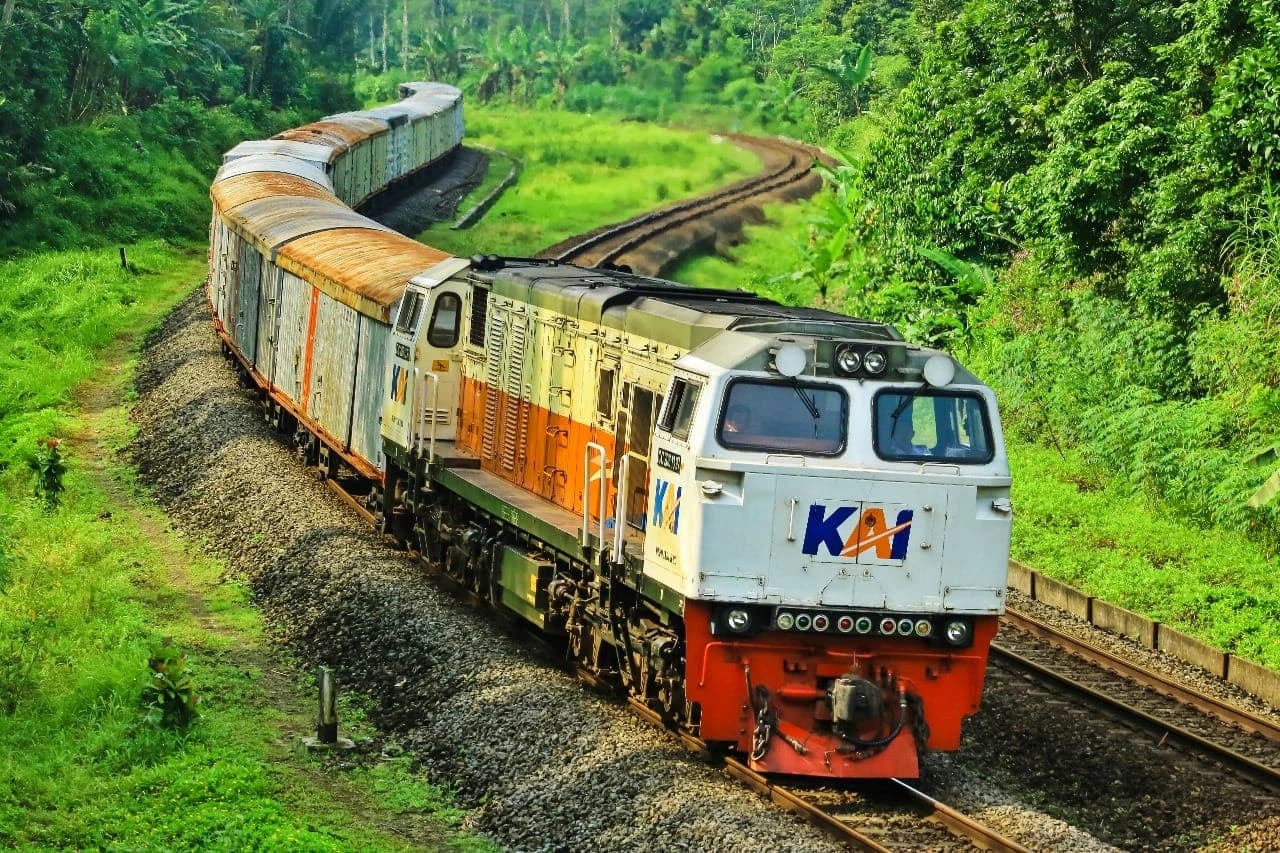
KAI Transported 10,050 Tons of Fertilizer in the First Semester of 2026, Supporting Distribution for the Agricultural Sector
Fertilizer distribution requires transportation support capable of connecting production sites, storage locations, and destination areas on a regular basis. In this process, rail transportation has the opportunity to complement other modes of transport, particularly for large-volume shipments and inter-regional deliveries.
Throughout January to June 2026, PT Kereta Api Indonesia (Persero) handled the shipment of 10,050 tons of fertilizer.
KAI’s performance records show that rail services transported 24,180 tons of fertilizer in 2024 and 21,060 tons in 2025. The data indicate that rail-based services have been used for fertilizer distribution over the past several years.
KAI Vice President of Corporate Communication Anne Purba stated that rail transportation can become part of a fertilizer distribution arrangement involving various transportation modes and related stakeholders.
“Rail transportation has the capacity to handle large-volume shipments with regular travel schedules. This service can complement existing distribution channels, depending on customer requirements and the readiness of receiving facilities in each region,” said Anne.
The role of well-planned transportation is becoming increasingly important amid changes in global fertilizer conditions. The Food and Agriculture Organization of the United Nations (FAO) recorded that global fertilizer trade volume during January–April 2026 declined by approximately 20 to 25 percent compared with the same period of the previous year. Meanwhile, the World Bank estimates that average global fertilizer prices in 2026 will increase by around 31 percent.
These changes in global trade and pricing highlight the importance of collaborative efforts to maintain the smooth supply and delivery of fertilizer within the country. Rail-based transportation can be integrated with road services and other modes so that the movement of goods from production sites to receiving regions can be adjusted according to demand.
At the national level, the Ministry of Agriculture recorded that subsidized fertilizer distribution as of 25 June 2026 had reached 54.28 percent of the national allocation of 9.55 million tons. The large volume of fertilizer distributed reflects an operational scale that requires support from producers, the government, transportation providers, warehouse operators, distributors, and receiving parties in the regions.
“Each mode of transportation has a complementary role. Rail transportation can serve the main inter-regional route, while deliveries to and from freight terminals can be continued by other modes. This pattern provides additional options for organizing fertilizer distribution,” Anne explained.
Fertilizer shipments are part of KAI’s non-coal freight services. During the first semester of 2026, KAI transported 5,963,948 tons of non-coal freight, including containers, fuel oil, cement and clinker, plantation products, retail goods, fertilizer, and other commodities.
This freight service capacity opens broader opportunities for collaboration with the Ministry of Agriculture, fertilizer producers, regional governments, logistics companies, and other related stakeholders. Its utilization can be adjusted according to production locations, rail networks, freight terminals, storage facilities, and the specific needs of each region.
According to Anne, discussions among stakeholders are needed to determine the most suitable delivery pattern. The arrangements include cargo volume, travel schedules, loading locations, terminal readiness, and fertilizer reception in destination regions.
“The smooth distribution of fertilizer is the result of collective efforts. KAI is ready to be part of that effort through freight services that are safe, scheduled, and adaptable to delivery requirements,” Anne concluded.
VP Corporate Communication KAI