
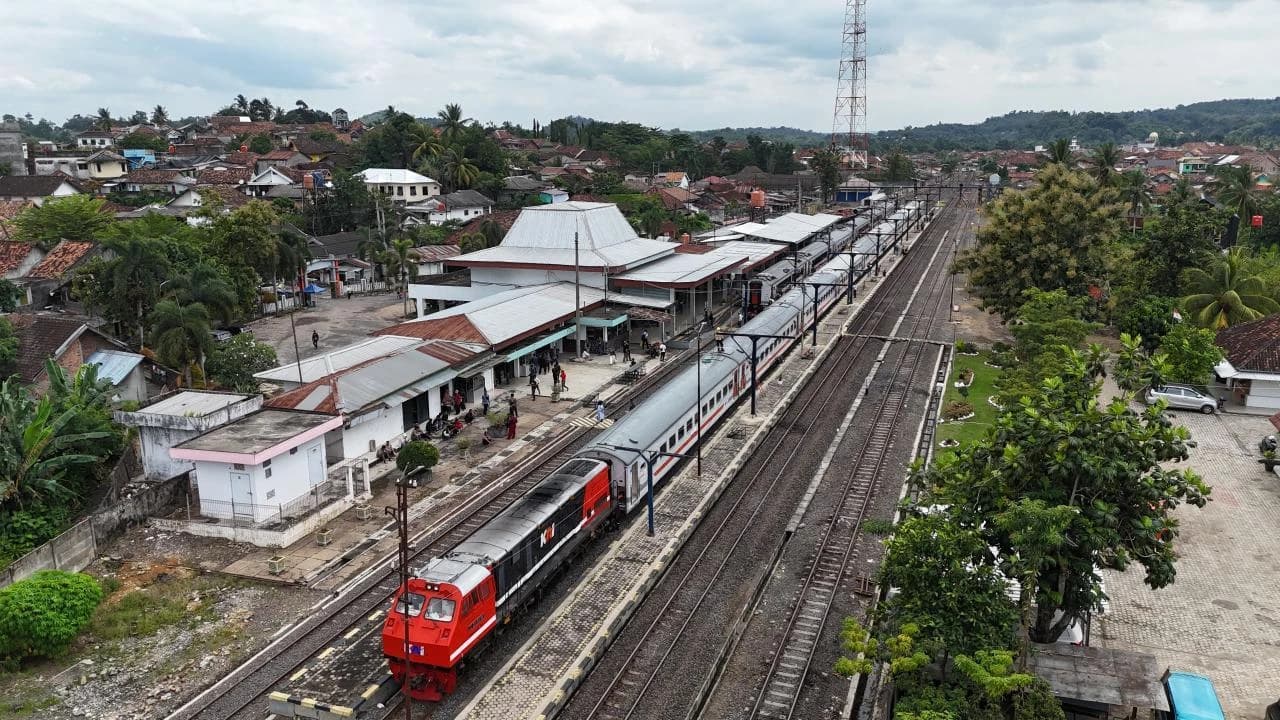
Discover Sumatra in Greater Comfort: Five Long-Distance Train Services Record Strong Passenger Growth in the First Half of 2026
Exploring Sumatra has become even more convenient by train. During the first half of 2026, PT Kereta Api Indonesia (Persero) recorded passenger growth across all five of its longest-distance passenger train services in Sumatra compared with the same period last year. This positive trend reflects growing public confidence in rail transport as a reliable, comfortable, and efficient way to connect major cities, business centers, educational institutions, public services, and tourist destinations across the island.
The five services include Rajabasa Train (Tanjungkarang–Kertapati round trip), Sindang Marga Train (Kertapati–Lubuklinggau round trip), Bukit Serelo Train (Kertapati–Lubuklinggau round trip), Sribilah Utama Train (Medan–Rantau Prapat round trip), and Kuala Stabas Train (Tanjungkarang–Baturaja round trip). All five recorded positive passenger growth in the first half of 2026. Rajabasa Train served 469,028 passengers, up 35.65 percent year-on-year, followed by Sindang Marga Train with 159,658 passengers (8.03 percent increase), Bukit Serelo Train with 278,705 passengers (1.11 percent increase), Sribilah Utama Train with 419,637 passengers (8.30 percent increase), and Kuala Stabas Train with 377,928 passengers, representing a 4.93 percent increase.
Vice President of Corporate Communication KAI Anne Purba explained that the consistent growth across all five services demonstrates the increasingly important role of rail transportation in supporting daily mobility throughout Sumatra. Train services continue to accommodate a wide range of travel purposes, including commuting to work, attending school, conducting business, accessing healthcare, visiting family, and exploring tourist attractions. The growing passenger numbers also highlight how railways have become an essential part of everyday life while strengthening regional connectivity across the island.
Among the five services, Rajabasa Train remains the longest route, covering approximately 388 kilometers between Tanjungkarang and Kertapati. Connecting Bandar Lampung and Palembang—two provincial capitals with vibrant economic, educational, culinary, and tourism activities—the service continues to play a significant role in supporting intercity travel in southern Sumatra. Upon arriving in Palembang, passengers can easily visit iconic destinations such as the Musi River, Ampera Bridge, and Benteng Kuto Besak, while Bandar Lampung serves as a gateway to the province's renowned natural and coastal attractions. According to Anne, the strong growth in Rajabasa Train passengers reflects increasing travel demand between Lampung and South Sumatra while expanding access to economic opportunities, public services, education, and tourism in both provinces.
The Sindang Marga and Bukit Serelo trains operate along the same 305-kilometer corridor between Kertapati and Lubuklinggau, offering passengers greater flexibility through different service classes. Sindang Marga provides Business and Executive Class services, while Bukit Serelo serves Economy Class passengers, allowing travelers to choose the option that best suits their preferences and travel needs.
Beyond connecting Palembang with major cities such as Prabumulih, Muara Enim, Lahat, Tebing Tinggi, and Lubuklinggau, both services also improve access to cultural and natural attractions throughout South Sumatra. Anne noted that the availability of multiple service options along the same route enables KAI to accommodate a broader range of passenger needs while providing greater flexibility in travel schedules and service categories.
In North Sumatra, Sribilah Utama Train continues to strengthen connectivity between Medan and Rantau Prapat along its approximately 266-kilometer route. The service links several important economic and community centers, supporting daily mobility while providing convenient access to Medan's historical landmarks, culinary destinations, commercial districts, and the growing economic activities across the Labuhanbatu region.
Meanwhile, Kuala Stabas Train, operating between Tanjungkarang and Baturaja over a distance of approximately 215 kilometers, also recorded positive passenger growth. The service plays an important role in connecting communities across Lampung and Ogan Komering Ulu, supporting daily travel while providing access to popular destinations, including natural attractions and cultural heritage sites throughout the region.
Anne added that KAI's passenger rail network continues to serve communities across North Sumatra, West Sumatra, South Sumatra, and Lampung through services tailored to local travel needs. In West Sumatra, KAI also operates Pariaman Ekspres, Minangkabau Ekspres, and Lembah Anai trains, supporting daily commuting, airport connectivity to Minangkabau International Airport, and travel to coastal tourism destinations.
Beyond improving mobility, railway services also contribute to local economic growth. Passenger travel stimulates demand for connecting transportation, restaurants, accommodations, souvenir shops, traditional markets, and micro, small, and medium-sized enterprises around stations and destination cities, creating wider economic benefits for local communities.
As part of its commitment to delivering better travel experiences, KAI will continue enhancing operational safety, service reliability, passenger comfort, station cleanliness, and ticket accessibility. Anne emphasized that every train journey across Sumatra is designed not only to move people safely and comfortably but also to encourage travelers to discover the island's rich economic potential, cultural diversity, and tourism attractions while supporting sustainable regional development.